Emergency Plumber Oahu: Licensed Contractor Considerations
A plumbing emergency on Oahu rarely arrives at a convenient hour. A water heater starts leaking after dinner. A drain backs up before a restaurant opens. A tenant reports water on the floor, and nobody knows whether the source is a fixture, a pipe inside the wall, or something tied to the building’s drainage system. In that moment, the natural search is simple: “plumber near me” or “emergency plumber.” The harder question comes immediately after: who is actually qualified to do the work, and what should a property owner or manager confirm before letting anyone start?
On Oahu, the answer is not just about speed. Plumbing work in Honolulu is governed by the City and County of Honolulu plumbing code, and that code covers a broad range of activity: design, installation, alteration, repair, relocation, replacement, addition, use, and maintenance of plumbing systems. That scope matters because many emergency calls are not isolated service tasks. A leak detection visit may lead to a pipe repair. A water heater repair may involve equipment replacement. Drain cleaning may uncover a damaged sewer line. Once a job moves from diagnosis into actual repair, replacement, alteration, or installation, licensing and permitting considerations can become central.
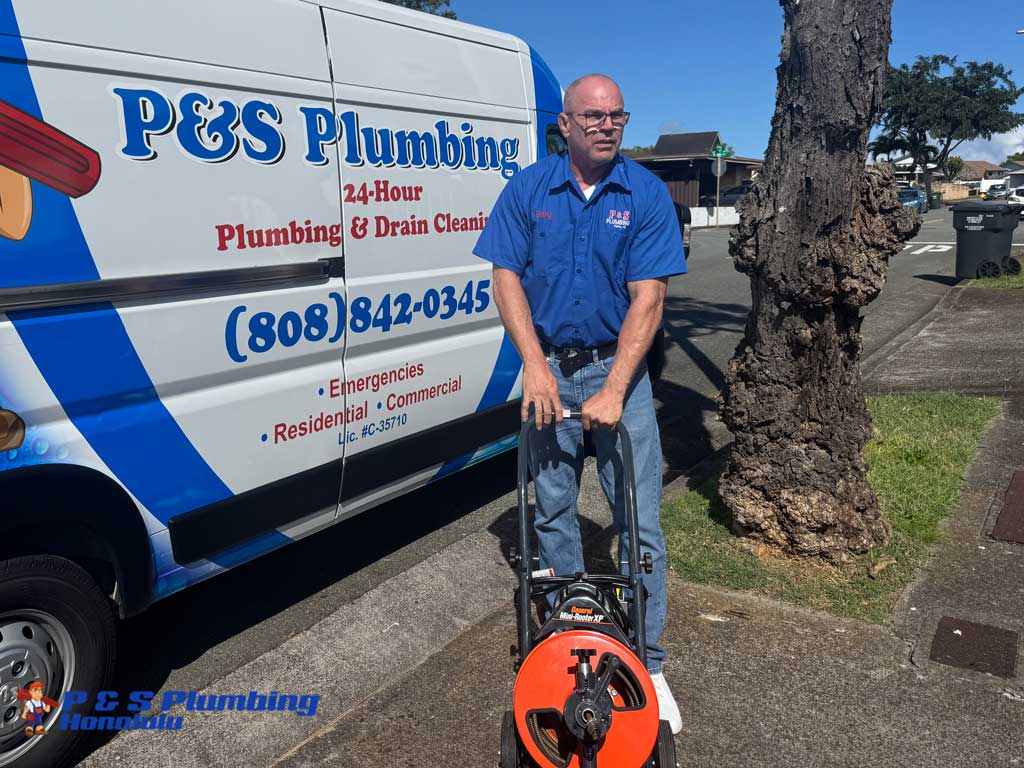
The best emergency plumber is not simply the one who answers first. It is the one who understands where urgent service ends and regulated plumbing work begins.
Why licensing matters during an emergency
When water is spreading across a floor or a drain has stopped a business from operating, licensing can feel like paperwork. It is not. Licensing is one of the clearest signs that a plumber or plumbing contractor is operating within the rules that apply in Honolulu.
Honolulu’s Department of Planning and Permitting states that electrical and plumbing work must be performed by contractors licensed by the State of Hawaii. Hawaii also maintains a professional licensing structure that includes a Board of Electricians and Plumbers, and the state provides an online database where license status, expiration dates, and disciplinary history can be checked. For a homeowner, landlord, facility manager, or business owner, that means license verification is not guesswork. It can be confirmed.
There is also an accountability layer built into the local code environment. The Honolulu plumbing code allows the authority having jurisdiction to verify that inspected work was performed by a licensed plumbing journey worker and/or contractor. In plain language, if plumbing work requires inspection, the city can look not only at what was done, but also at whether properly licensed people performed it.
That point becomes especially important after emergency service. A stopgap measure may control immediate damage, but permanent work still needs to be done correctly. If the repair later becomes part of a sale disclosure, insurance review, tenant dispute, commercial buildout, or city inspection, the question of who performed the work can resurface.
The emergency call is only the first decision
A late-night plumbing call often begins with limited information. “Water is coming from under the sink.” “The water heater is making noise.” “The toilet won’t clear.” “There’s sewage backing up.” Those descriptions help, but they do not always identify the true problem. A licensed plumber Oahu property owners call for emergency service should be able to distinguish between containment, diagnosis, and regulated repair.
Containment might mean shutting off water, stopping active flow, isolating a fixture, or making the area safer until full work can proceed. Diagnosis might involve determining whether the problem is with a fixture, drainage piping, water-heating equipment, water-treating equipment, or another part of the plumbing system. Repair or replacement may then trigger code, permit, and inspection considerations.
This is where experience matters. A service provider who treats every problem as a quick fix can miss the legal and practical requirements attached to the work. A properly licensed contractor should recognize when the job is more than a simple service visit. For example, water heater repair can remain limited, or it can become replacement of water-heating equipment. Drain cleaning may restore flow, or it may reveal conditions that point toward sewer line repair. Leak detection may identify a failure that requires opening building surfaces and altering or replacing piping. These are not the same job, even if they begin with the same phone call.
Honolulu plumbing code has a broad reach
The City and County of Honolulu plumbing code is not limited to new construction. It applies to the design, installation, alteration, repair, relocation, replacement, addition, use, and maintenance of plumbing systems. That range is wide enough to cover much of what people commonly associate with residential and commercial plumbing service.
This matters because some owners assume code applies only when a building is being built or remodeled. In reality, emergency plumbing work often touches existing systems in ways the code still regulates. Replacing a section of drainage piping is not outside the code commercial plumber contractor just because the building is old. Repairing or replacing water-heating equipment is not exempt from concern just because the failure was sudden. Plumbing systems remain regulated after occupancy.
A responsible plumber Honolulu customers hire should be comfortable explaining this without making the situation sound more complicated than it is. The point is not to turn every service visit into a bureaucratic exercise. The point is to understand that Honolulu has rules governing plumbing work, and an emergency does not erase those rules.
Permits: when urgency meets process
Honolulu requires permits for plumbing-related work such as installing, removing, altering, repairing, or replacing plumbing, drainage piping, fixtures, gas appliances, and water-heating or water-treating equipment. That list is significant because it overlaps with many calls that start as emergencies.
A property owner does not need to become a code expert before calling an emergency plumber. Still, it helps to ask direct questions once the immediate danger is controlled. Is this only a service call, or will repair or replacement work be performed? Does this task require a permit? If inspection is needed, who handles that process? Is the contractor licensed by the State of Hawaii for the work being proposed?
Those questions are not adversarial. Good contractors expect them. In fact, the way a plumber responds can tell you a lot. A professional answer should be calm, specific, and tied to the work at hand. A vague answer such as “permits never matter for this kind of thing” should raise concern, especially when the task involves plumbing, drainage piping, fixtures, gas appliances, water-heating equipment, or water-treating equipment.
Emergency work creates pressure, and pressure can lead to rushed decisions. The better approach is to separate immediate mitigation from permanent repair. Stop the water, protect the building, document the condition, then confirm licensing and permit needs before authorizing substantial work.
What to verify before hiring an emergency plumber
When time is short, verification should be simple and focused. You are not trying to conduct a full procurement process at midnight. You are trying to avoid hiring someone who cannot legally perform the work or who cannot carry the job through permitting and inspection if those steps apply.
Use this short checklist before authorizing anything beyond immediate stabilization:
- Confirm the plumber or contractor is licensed by the State of Hawaii for plumbing work.
- Check that the license is current, not expired.
- Review whether any disciplinary history appears in the state licensing database.
- Ask whether the proposed work requires a City and County of Honolulu permit.
- Ask who will be responsible for permit handling and inspection coordination if required.
Those five points can prevent major problems later. A person may be skilled with tools and still not be properly licensed. A company may answer emergency calls and still be unable to complete permitted plumbing work. A low price may become expensive if the work has to be corrected, documented, or redone by a licensed contractor.
Residential emergencies and the hidden scope problem
In single-family homes and condos, the first visible symptom is often misleading. A wet cabinet floor may suggest a supply line leak, but the actual cause might involve a fixture connection or piping concealed behind a wall. A slow drain may look like a minor clog until cleaning reveals a larger issue with the drainage line. A water heater problem may be limited to a serviceable component, or it may involve replacement of water-heating equipment.
The homeowner’s challenge is that the problem changes as more information appears. At 7 p.m., the job is “stop the leak.” By 9 p.m., it may be “replace piping.” The next morning, it may be “coordinate a permitted repair.” This is why homeowners should resist approving broad work based only on the first few minutes of inspection.
A licensed plumber should be able to describe the likely scope in stages. The first stage is immediate protection of the property. The second is diagnosis. The third is repair planning, including any required permit or inspection. That staged approach protects both the property owner and the contractor. It also creates a clearer record of what happened, which can matter if the issue affects adjacent units, tenants, insurance claims, or future property transactions.
For condo owners, another practical consideration is building coordination. While the verified legal requirements still come from city and state rules, multi-unit properties often involve additional communication with management, maintenance staff, or association representatives. A plumber Oahu residents rely on for emergency service should be able to work professionally in that environment, especially when shutting off water or accessing common systems affects other occupants.
Commercial plumbing has less room for informal decisions
A commercial plumbing emergency carries different stakes. A backed-up drain can interrupt operations. A failed water heater can affect sanitation, tenant service, or building function. A leak can damage inventory, equipment, or tenant improvements. For commercial properties, the person authorizing work may be an owner, manager, tenant, maintenance supervisor, or facilities director. Each may have different authority, but the legal requirements for plumbing work still apply.
A commercial plumber should be prepared to discuss licensing, permitting, and inspection in businesslike terms. For larger commercial developments, the Honolulu Board of Water Supply handles water-service and permitting-related matters, and large commercial developments may require master plans and more complex review of water-system capacity. Not every emergency repair will involve that level of review. Still, commercial property owners should recognize that water service, capacity, and plumbing infrastructure can become more complex as project size and use increase.
Wastewater issues deserve similar caution. Honolulu wastewater guidance emphasizes protecting sewer infrastructure and notes that sewer connection and related wastewater issues involve city review and permitting processes. A simple drain cleaning call may be straightforward. Sewer line repair or work tied to sewer connections can carry additional review obligations. The right contractor will not gloss over that distinction.
Commercial settings also magnify the cost of poor documentation. If a tenant improvement, restaurant, retail space, warehouse, office building, or multi-tenant property later undergoes review, undocumented plumbing work can become a problem. Licensed work and proper permitting create a clearer path through inspection and future alterations.
Drain cleaning, leak detection, and sewer line repair are not interchangeable
Search terms often blur categories. A person may search “drain cleaning” because water is not going down. Another may search “leak detection” because a utility bill or damp area suggests hidden water. Someone else may look for “sewer line repair” after repeated backups. These services can overlap, but they are not the same from a technical or regulatory standpoint.
Drain cleaning typically focuses on restoring flow through a drainage path. It may solve the immediate complaint. It may also reveal that the drainage piping itself needs repair or replacement. Once the task moves into altering, repairing, or replacing drainage piping, permit considerations may apply under Honolulu’s requirements.
Leak detection focuses on locating the source of unwanted water. It is often diagnostic at first. The repair that follows can range from a minor fixture issue to work on piping inside the plumbing system. Because Honolulu’s plumbing code applies to repair, replacement, alteration, and maintenance of plumbing systems, the licensed contractor question remains relevant after the leak is found.
Sewer line repair can be more involved. It may affect drainage piping and may intersect with wastewater review or permitting processes, depending on the nature of the work. Property owners should be especially careful about authorizing sewer-related work without confirming whether permits, inspections, or city review are required.
The practical point is simple: the service name does not determine the compliance obligation. The actual work does.
Water heater repair deserves careful attention
Water-heating equipment sits at the intersection of comfort, safety, code, and permitting. Honolulu permit requirements include work involving water-heating equipment, including installing, removing, altering, repairing, or replacing it. That does not mean every call feels complex from the customer’s perspective. A homeowner may only know there is no hot water or that water is collecting near the unit. A business may only know hot water service has stopped.
The contractor, however, should know when the task remains a service matter and when it becomes repair, alteration, replacement, or installation work that requires compliance steps. This is especially important because water heater problems often create urgency. People want hot water restored quickly, and a leaking unit can cause property damage. Urgency can make it tempting to approve a fast replacement without asking about licensing or permits.
A better conversation is direct: “Are you licensed for this work?” “Does this water heater repair or replacement require a permit?” “Will the work be available for inspection if required?” A professional should answer those questions without hesitation.
The “plumber near me” search is only a starting point
Location matters on Oahu because response time matters. A nearby plumber may arrive faster, and during an active leak, minutes count. But proximity is not qualification. The search result that appears first is not necessarily the contractor best suited for regulated plumbing work in Honolulu.
A strong selection process balances response time with licensing. If the situation is severe, ask whether the plumber can first perform emergency containment while the full scope is evaluated. If permanent work is needed, confirm the contractor’s State of Hawaii license and ask about permit requirements before proceeding. This two-step approach is especially useful when the first call happens after hours and the final repair plan can be made during normal business hours.
Property owners sometimes worry that asking these questions will slow everything down. In practice, it often speeds up the right work. A licensed contractor who understands Honolulu requirements can plan the job correctly from the beginning. That avoids delays caused by missing permits, failed inspections, or unclear responsibility.
Red flags during an urgent plumbing call
Emergency service creates a perfect environment for shortcuts. The property owner is stressed. The damage may be spreading. The person on the phone may sound confident. Confidence is useful, but it is not a substitute for proper licensing.
Watch for these warning signs when hiring under pressure:
- The contractor refuses to provide license information or says it is unnecessary.
- The contractor dismisses permit questions without asking what work will be performed.
- The estimate describes major repair or replacement work but never mentions code, inspection, or permits.
- The contractor pressures you to approve permanent work before diagnosing the problem.
- The contractor cannot explain who is responsible for permit handling if one is required.
None of these signs automatically proves bad intent, but each one justifies slowing down. In an emergency, it is reasonable to authorize actions that prevent immediate damage. It is also reasonable to pause before approving regulated work that may affect the plumbing system, drainage piping, fixtures, gas appliances, water-heating equipment, or water-treating equipment.
How licensed contractors protect the owner’s interests
A licensed contractor does more than perform the physical repair. The contractor helps place the work within the correct legal and technical framework. That includes recognizing when Honolulu code applies, when permits may be required, and when inspected work must be traceable to properly licensed individuals or businesses.
This matters long after the emergency ends. A property owner may need to show that a repair was properly performed. A commercial tenant may need documentation for a landlord. A future buyer may ask about plumbing alterations. A city inspector may review related work later. When the original contractor was licensed and the proper process was followed, those conversations become much easier.
There is also a practical quality issue. Licensing alone does not guarantee perfect workmanship, but it creates a baseline of accountability. The state licensing database allows owners to check current status, expiration dates, and disciplinary history. That transparency gives customers a way to make a more informed decision than relying on advertising claims.
Edge cases: small fix or regulated repair?
One of the harder judgment calls in emergency plumbing is deciding whether a task is minor service or regulated repair. Customers should not be expected to know that line on their own. The contractor should help define it.
For example, a clogged drain may be cleared without replacing piping. But if the plumber identifies damaged drainage piping and proposes repair or replacement, the situation changes. A water heater may need attention, but if the work involves repairing or replacing water-heating equipment, permit requirements may come into play. Leak detection may simply locate a source, but the piping repair that follows can involve the plumbing system in a way covered by code.
The safest question is not “Is this a big job?” Size can be misleading. The better question is “What exactly are you going to install, remove, alter, repair, or replace?” That language tracks the kinds of work Honolulu identifies in its permit requirements. It helps move the conversation from vague reassurance to specific scope.
Working with city and water-related review processes
Most emergency plumbing calls do not begin as city review matters. They begin with water where it should not be, or no water where it is needed. Still, some work can connect to broader public systems and review processes.
The Honolulu Board of Water Supply handles water-service and permitting-related matters for projects. Larger commercial developments may require master plans and more complex review of water-system capacity. On the wastewater side, Honolulu guidance emphasizes protecting sewer infrastructure and recognizes that sewer connection and related wastewater issues involve city review and permitting processes.
For owners and managers, the lesson is not to assume every repair becomes a large review. It is to understand that water service and sewer-related work can carry obligations beyond the immediate building interior. A qualified plumber Honolulu businesses and residents hire should know when a routine service call remains routine and when the work needs coordination with city or water-related processes.
Documentation after the emergency
Once the immediate problem is under control, ask for clear documentation. A good record should describe the complaint, the observed condition, the work performed, and any recommendation for additional repair or replacement. If permits are required, the documentation should identify who is handling them. If inspection is required, the owner should know what to expect.
Photographs can also be useful, especially before concealed areas are closed or before damaged components are removed. The point is not to create an excessive file for every small call. It is to preserve enough information to explain what happened and why the chosen repair was appropriate.
For commercial properties, documentation should be kept with maintenance records. For rental properties, it should be tied to the unit or building file. For homeowners, it should be saved with other repair and improvement records. Plumbing emergencies fade from memory quickly, but records remain useful when questions arise months or years later.
Choosing speed without sacrificing compliance
An emergency plumber on Oahu has to be responsive. That part is non-negotiable. But the fastest response is not always the best response if the person performing the work is not properly licensed or if the job proceeds without required permits. Honolulu’s plumbing code and permit requirements exist whether the call happens at noon or near midnight.
The practical standard is balanced. Stop active damage quickly. Use a licensed State of Hawaii contractor for plumbing work. Verify license status when possible through the state database. Ask whether the work requires a City and County of Honolulu permit. Treat water heater repair, drain cleaning that leads to piping work, sewer line repair, leak detection followed by repair, and commercial plumbing issues with appropriate care.
A plumbing emergency already brings enough stress. The right contractor reduces that stress by handling the immediate problem while keeping the work aligned with Honolulu’s rules. That combination of urgency, licensing, and judgment is what property owners should look for when searching for a plumber Oahu can trust.
Name: P&S Plumbing
Address: 1714 Homerule St Bay 1, Honolulu, HI 96819, United States
Phone: 808-842-0345
Website: https://www.psplumbinghawaii.com/locations/honolulu/
Email: [email protected]
Hours:
Sunday: Open 24 hours
Monday: Open 24 hours
Tuesday: Open 24 hours
Wednesday: Open 24 hours
Thursday: Open 24 hours
Friday: Open 24 hours
Saturday: Open 24 hours
Time zone: Hawaii-Aleutian Time
Open-location code / Plus code: 84F8+HP Honolulu, Hawaii, USA
Map/listing URL: https://www.google.com/maps/search/?api=1&query=Google&query_place_id=ChIJl_3qEMhvAHwRtgTEMKE27zE
Embed iframe:
Socials:
https://www.facebook.com/psplumbinghonolulu/
https://x.com/PSPlumbingoahu
https://www.youtube.com/@PSPlumbingHonolulu/
https://soundcloud.com/p-s-plumbing-honolulu
P&S Plumbing provides plumbing services from its Honolulu location on Homerule Street.
The official Honolulu page lists drain cleaning, plumbing repairs, water heater repair, water heater installation, sewer line repair, and 24-hour emergency plumbing services.
P&S Plumbing serves residential and commercial customers across Honolulu and Oahu, including Kalihi, Kakaako, Ala Moana, Waikiki, Moiliili, Makiki, Manoa, Aliamanu, Aiea, Pearl City, Waipahu, Ewa Beach, Kapolei, Hawaii Kai, and nearby communities.
The Honolulu shop is listed at 1714 Homerule St Bay 1, Honolulu, HI 96819, near Kalihi and local routes serving central Honolulu.
The official website lists Hawaii State License Number CT-35710 and describes the company as licensed and insured.
Customers can contact P&S Plumbing for drain cleaning, hydro jetting, leak detection, water heater service, sewer line repair, fixture repair and installation, kitchen plumbing, bathroom plumbing, commercial plumbing, residential plumbing, and emergency plumbing needs.
For plumbing service in Honolulu and Oahu, call 808-842-0345 or visit https://www.psplumbinghawaii.com/locations/honolulu/
The public map listing uses plus code 84F8+HP Honolulu, Hawaii, USA and can help customers find P&S Plumbing near Homerule Street in Honolulu.
Popular Questions About P&S Plumbing
What does P&S Plumbing provide in Honolulu?
P&S Plumbing provides drain cleaning, plumbing repairs, water heater repair and installation, sewer line repair, hydro jetting, leak detection, fixture repair and installation, bathroom plumbing, kitchen plumbing, residential plumbing, commercial plumbing, and 24-hour emergency plumbing services.
Where is P&S Plumbing located in Honolulu?
P&S Plumbing is listed at 1714 Homerule St Bay 1, Honolulu, HI 96819, United States. The official website also lists the address as 1714 Homerule Street 1, Honolulu, HI 96819.
What phone number should Honolulu customers call?
The official Honolulu page and contact page list 808-842-0345 for Honolulu-Oahu service.
What is the email address for P&S Plumbing?
The email address is [email protected].
What are P&S Plumbing’s Honolulu hours?
The official Honolulu page and supplied listing show P&S Plumbing as open 24 hours a day, seven days a week, Hawaii-Aleutian Time.
Is P&S Plumbing licensed?
The official Honolulu page lists Hawaii State License Number CT-35710. Customers can confirm license status directly with the relevant Hawaii licensing authority before hiring.
Does P&S Plumbing offer emergency plumbing in Honolulu?
Yes. The official Honolulu page lists 24-hour emergency plumbing services for urgent plumbing issues.
Does P&S Plumbing handle water heaters?
Yes. The official Honolulu page lists water heater repair, water heater installation, tankless water heater installation, solar water heater installation, and traditional water heater installation.
Does P&S Plumbing provide commercial plumbing?
Yes. The official Honolulu page lists commercial plumbing services along with residential plumbing services.
How do I contact P&S Plumbing?
Call 808-842-0345, visit https://www.psplumbinghawaii.com/locations/honolulu/, or use the map URL: https://www.google.com/maps/search/?api=1&query=Google&query_place_id=ChIJl_3qEMhvAHwRtgTEMKE27zE. Social profiles: Facebook, X, YouTube, and SoundCloud.
Landmarks Near Honolulu, HI
Homerule Street: The street listed for P&S Plumbing’s Honolulu location and a practical reference point for finding the shop.
Kalihi: A central Honolulu area near Homerule Street with homes, businesses, warehouses, and local service routes.
Dillingham Boulevard: A major nearby corridor serving Kalihi, Iwilei, Honolulu Harbor, and surrounding business areas.
Nimitz Highway: A key Honolulu route connecting the airport, harbor, downtown, and central business districts.
H-1 Freeway: A major Oahu highway used to reach Honolulu neighborhoods and communities across the island.
Honolulu Harbor: A major commercial waterfront landmark near downtown and industrial service areas.
Daniel K. Inouye International Airport: A major transportation landmark west of central Honolulu and near key Oahu service routes.
Downtown Honolulu: A central business and residential district served by local plumbing contractors.
Chinatown Honolulu: A nearby historic district with restaurants, shops, apartments, and older plumbing infrastructure.
Iwilei: A nearby commercial and industrial area with warehouses, retail properties, and service businesses.
Kakaʻako: A growing residential, retail, and commercial district southeast of downtown Honolulu.
Ala Moana Center: A major Honolulu retail landmark and citywide reference point.
Waikiki: A major visitor, hotel, condo, and residential area within P&S Plumbing’s broader Honolulu service area.
Moanalua: A Honolulu community listed within P&S Plumbing’s broader Oahu service-area references.
Pearl Harbor area: A major Oahu landmark west of Honolulu and near residential and commercial service routes.
For drain cleaning, plumbing repairs, water heater service, sewer line repair, hydro jetting, leak detection, fixture installation, commercial plumbing, residential plumbing, or 24-hour emergency plumbing near these Honolulu and Oahu landmarks, contact P&S Plumbing at 808-842-0345 or visit https://www.psplumbinghawaii.com/locations/honolulu/